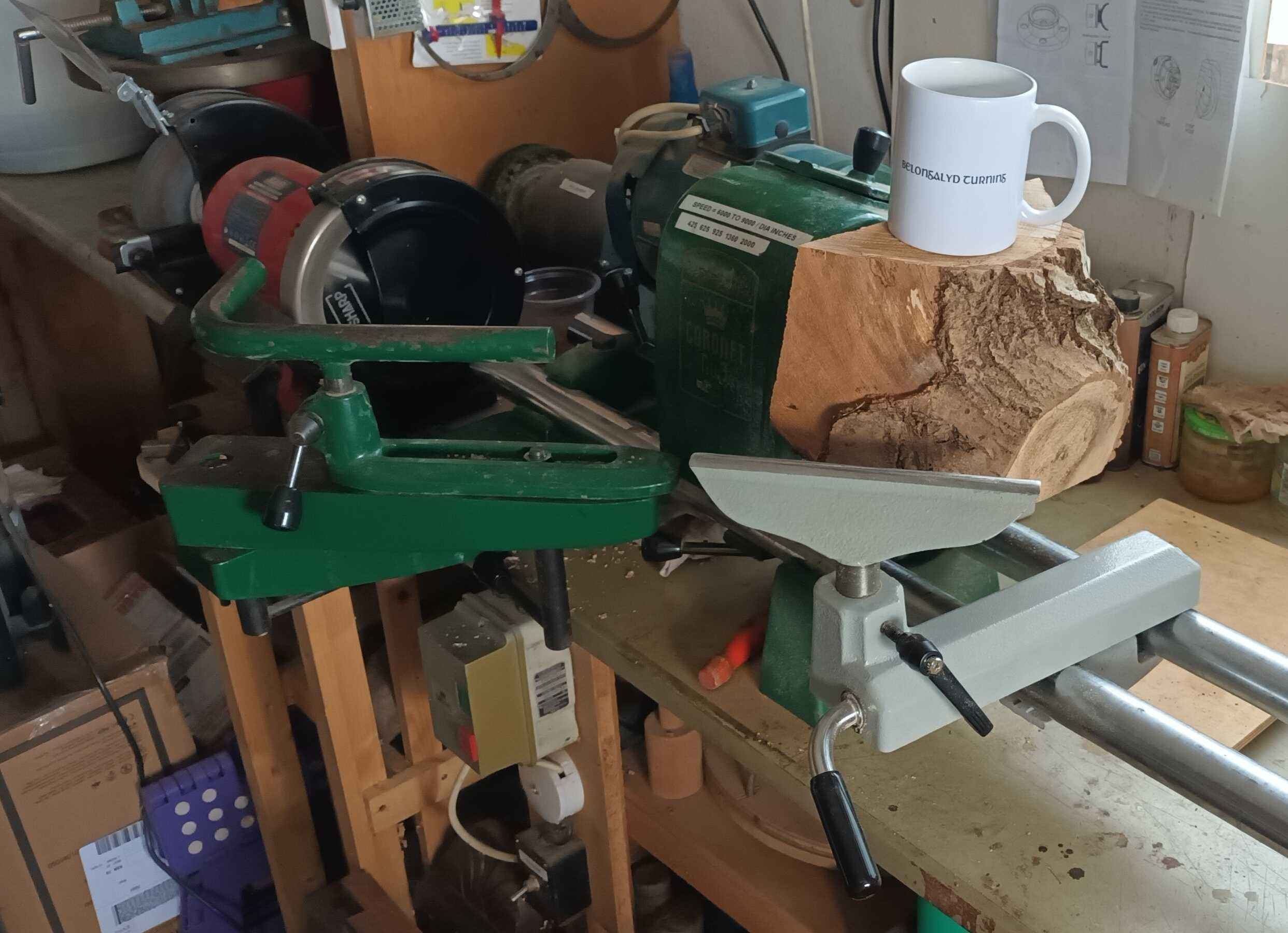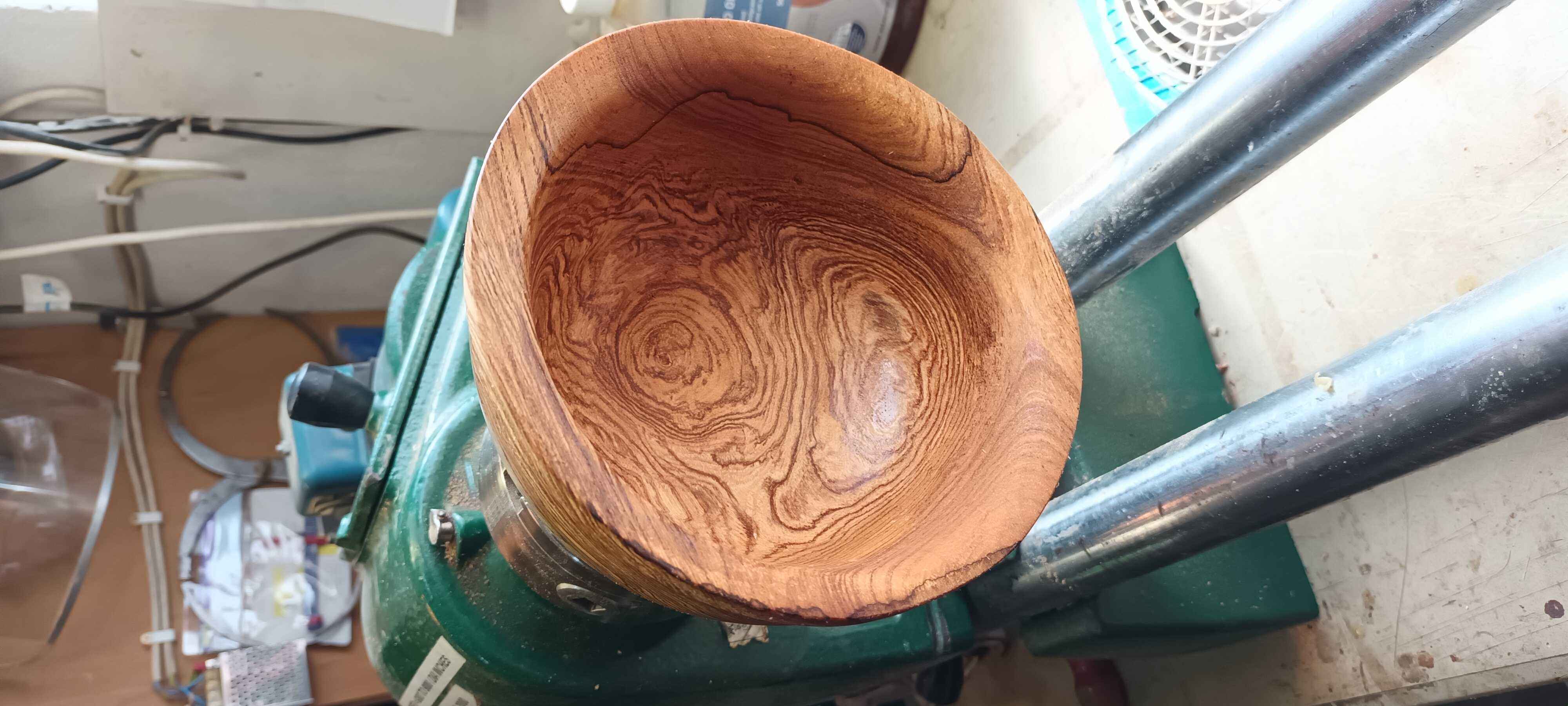
When I was cutting up the poplar tree I saw a little stub of a branch poking out that had the beginnings of decay known as spalting in the centre. Branch junctions often have interesting grain patterns where the branch meets the main trunk.
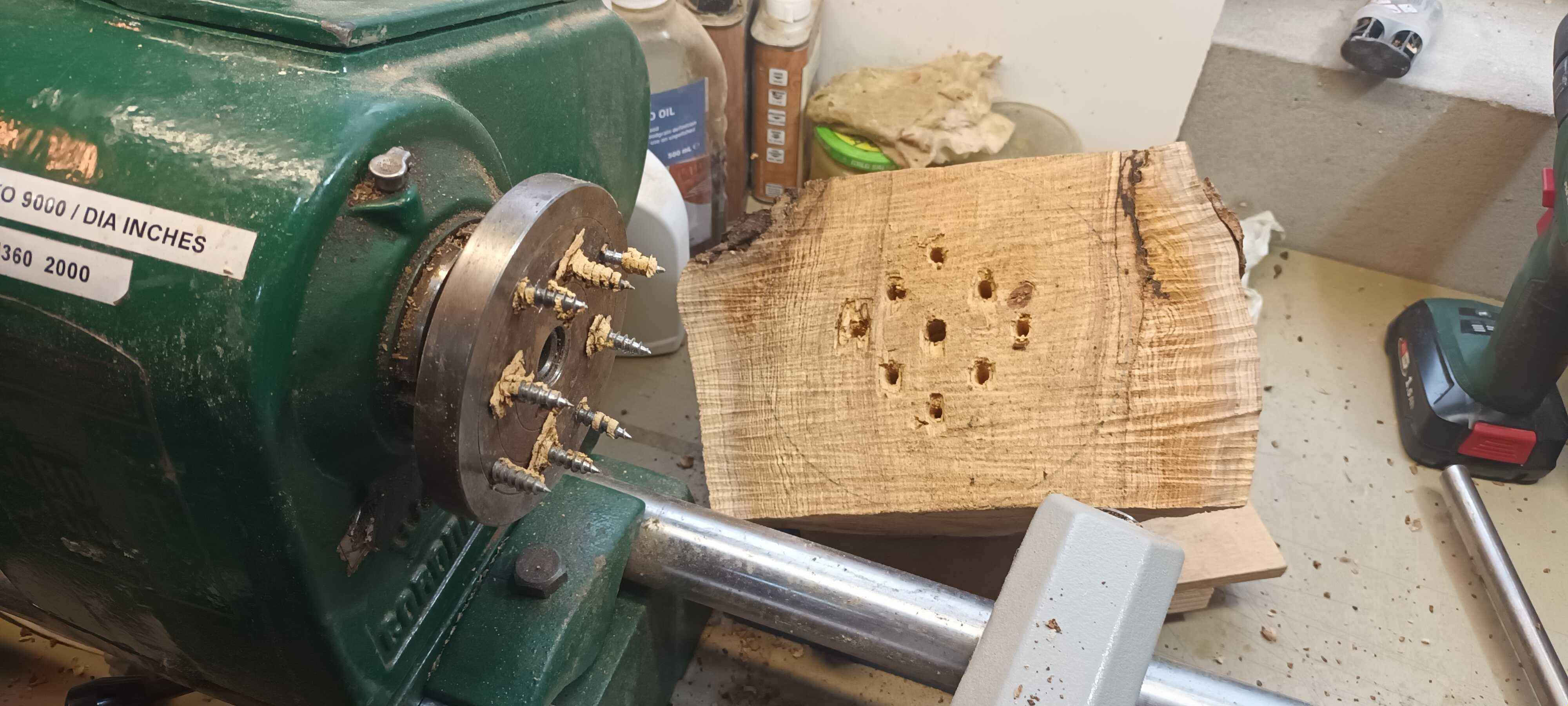
As I started to turn this piece it quickly became clear that it would be troublesome as the wood next to the face plate which would become the top of the bowl was rather soft, and in fact the entire piece leapt off the lathe onto the bench. I attached a larger face plate which has better leverage as well as allowing the screws to go into some sturdier wood and started again.
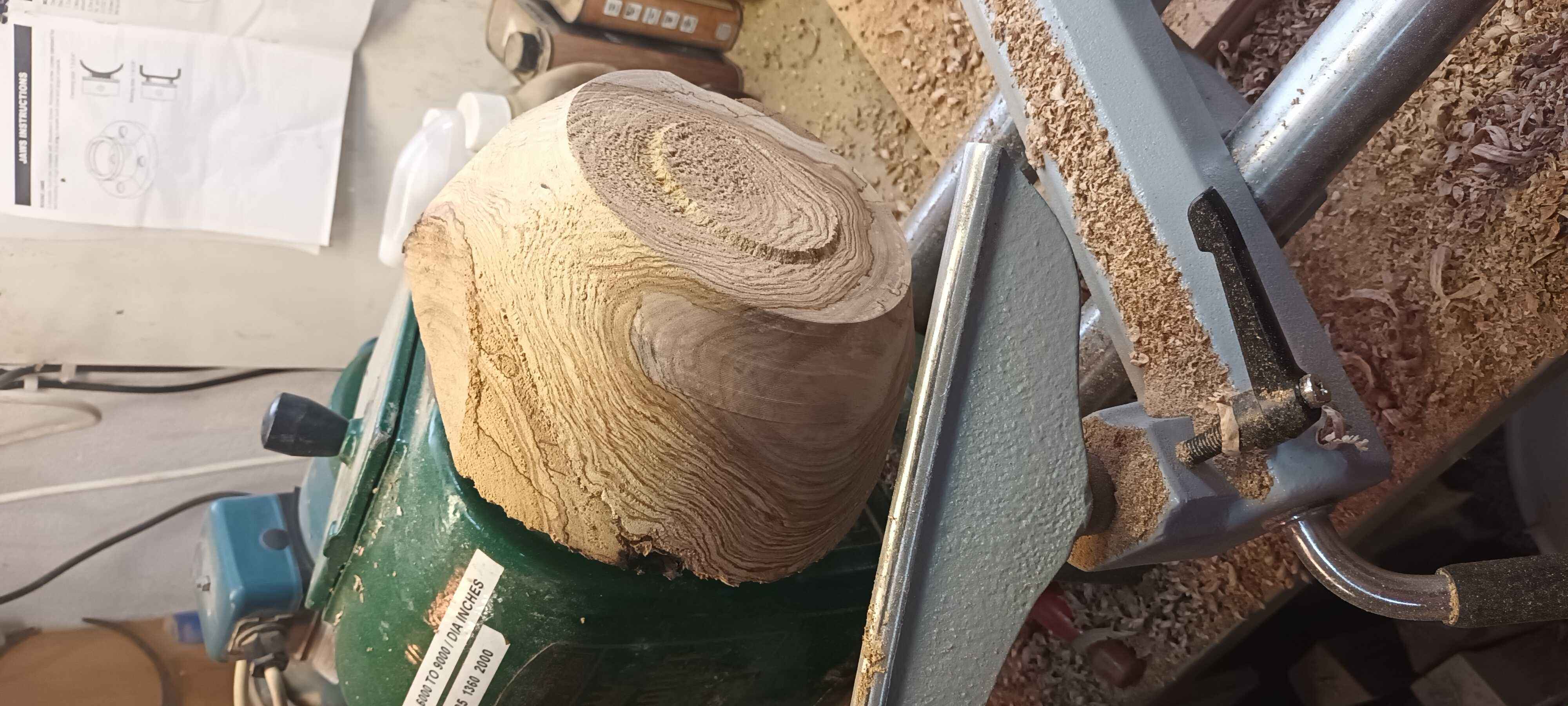
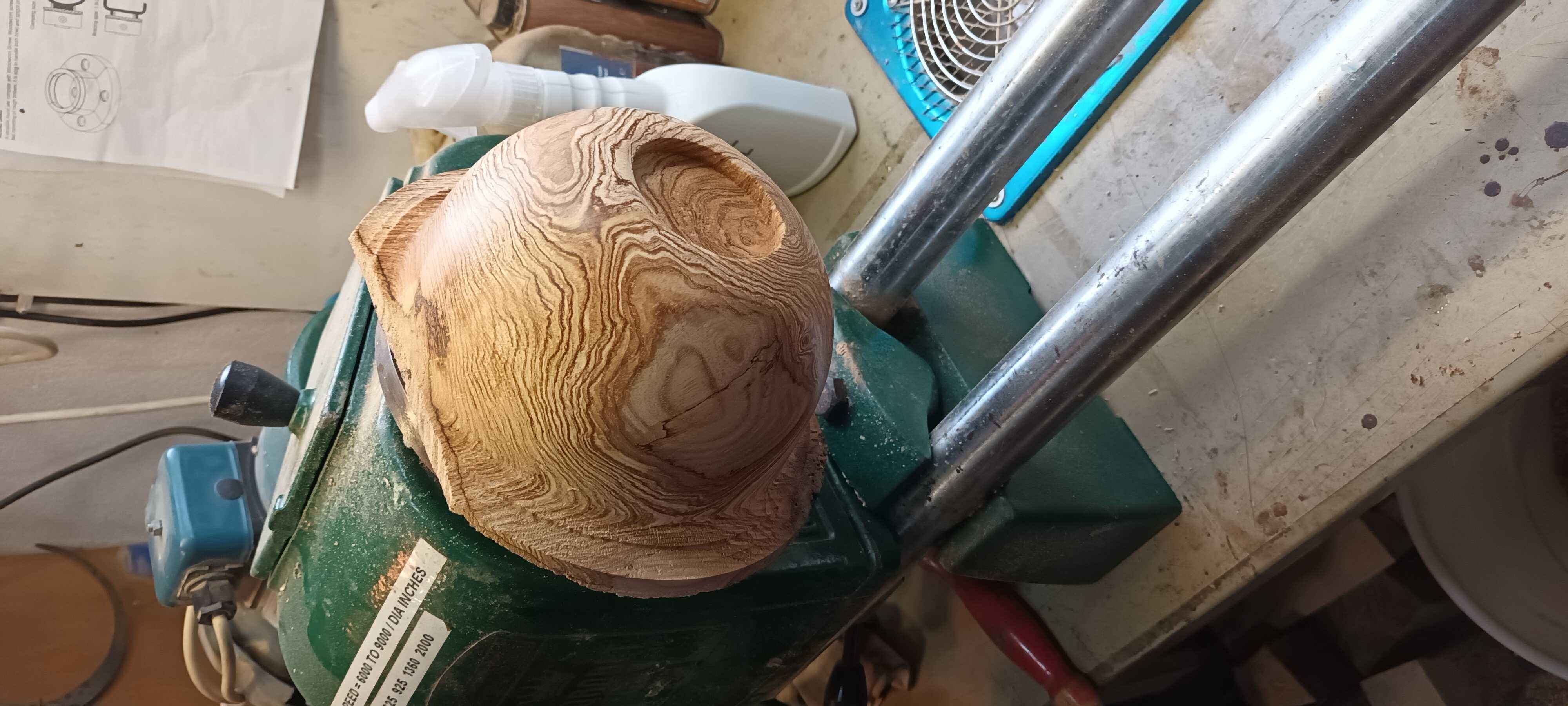
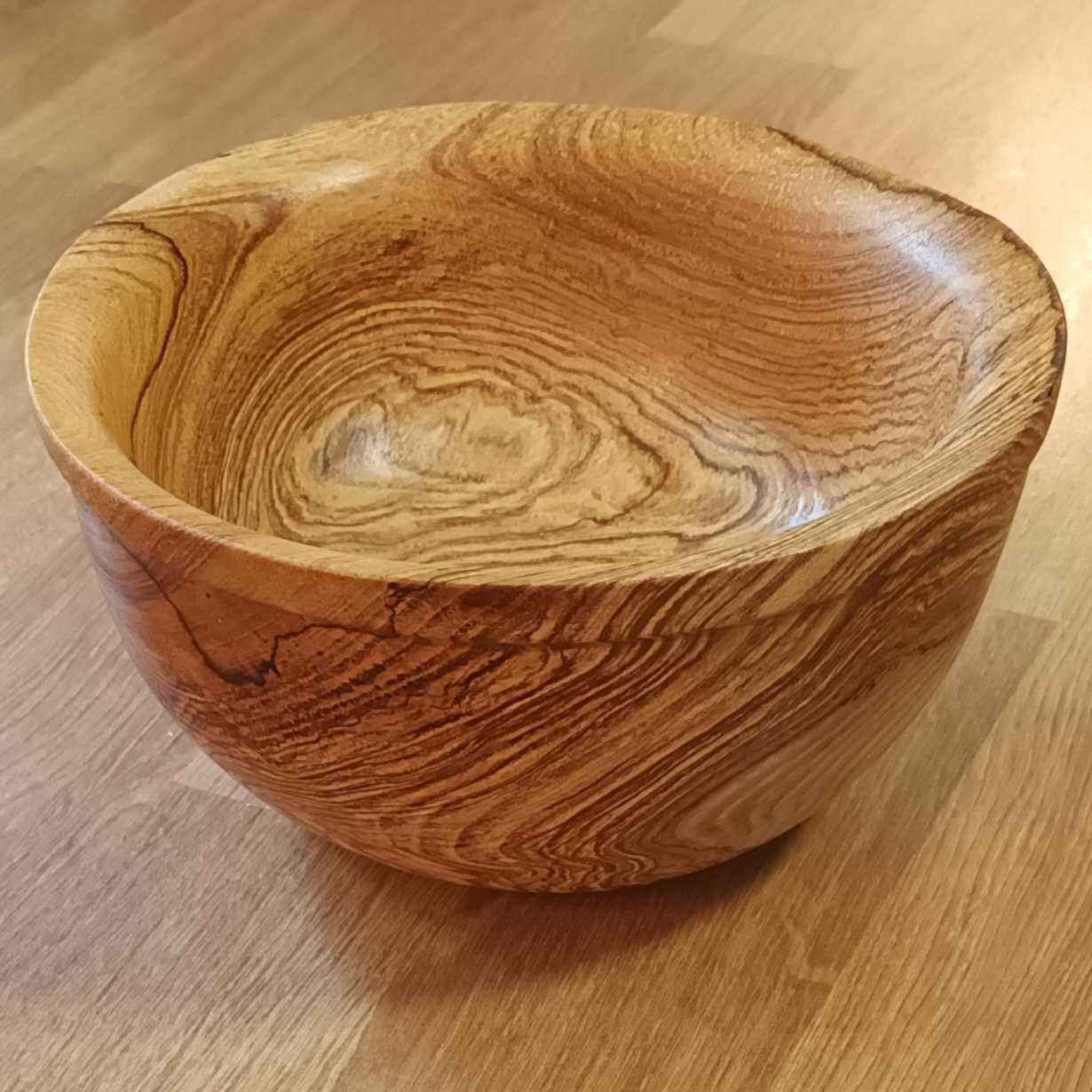
The rim was a bit accidental as I didn't want to cut too near the face plate (turning mild steel with my expensive bowl gouge is not a good idea) and when I turned it round it had change shape already. Most bowls do this to some extent as removing wood relieves stresses, but semi-seasoned pieces are especially prone to it. I managed to clean out a good part of the interior with Forstner bits, trying to put as little pressure on the foot as possible, and then finished the hollowing with scrapers.There is heavy spalting and fantastic grain patterns, but those grain patterns mean there's no uniformity in the grain, so using a gouge can get exciting. Gouges don't cut well against the grain, and the wood here is fairly soft and rather prone to tear rather than cutting.
After all that it sanded up nicely, and after a sealing coat of shellac and a polish with boiled linseed oil and beeswax it looks rather pleasing.