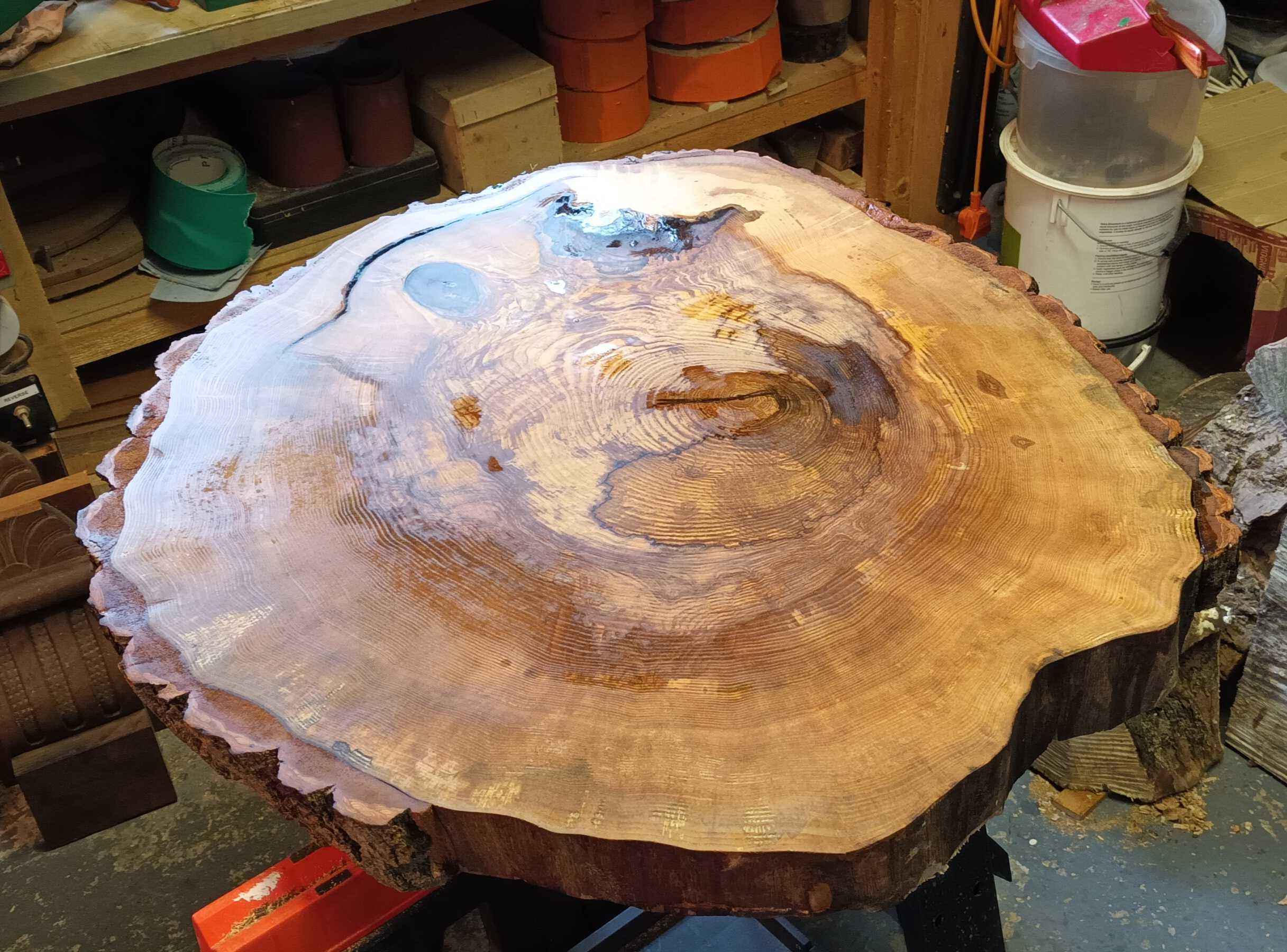
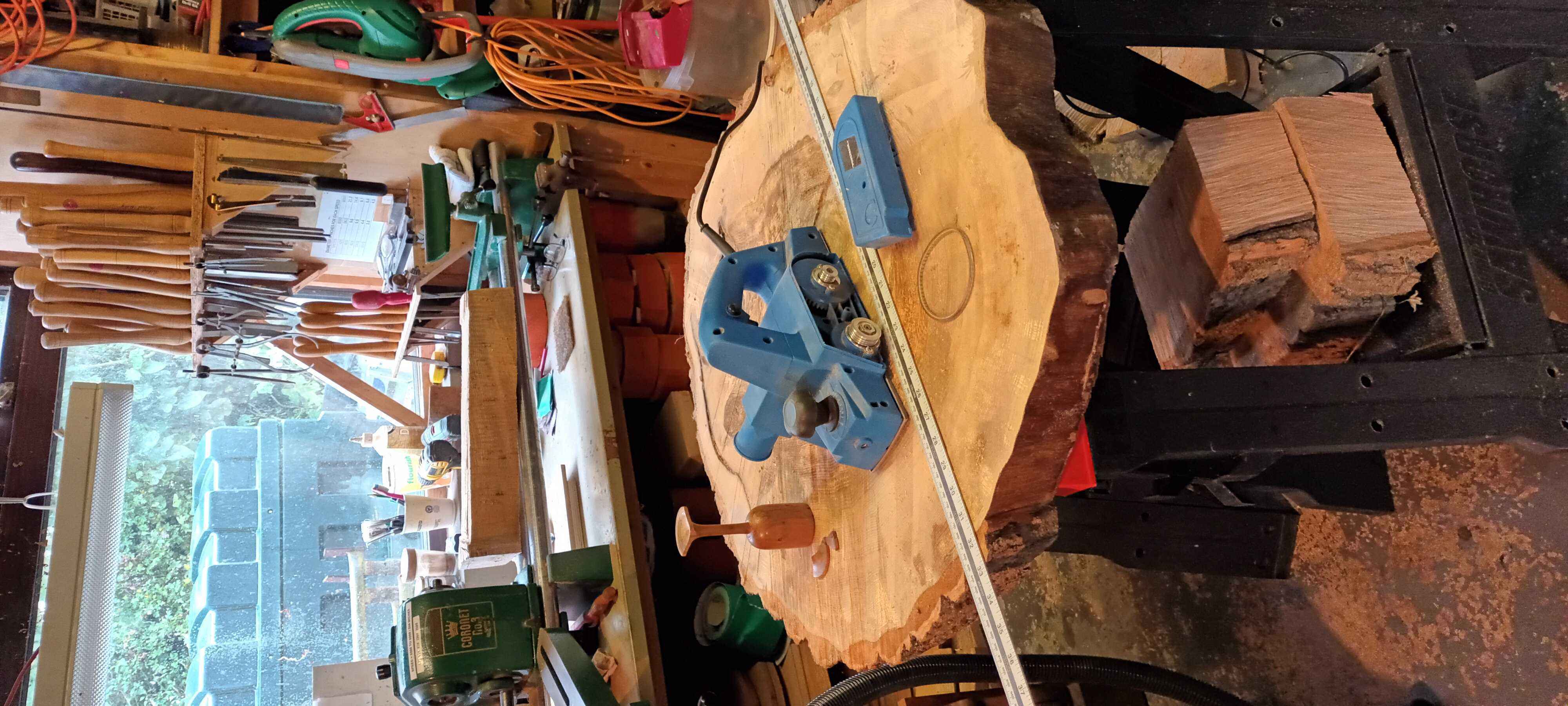
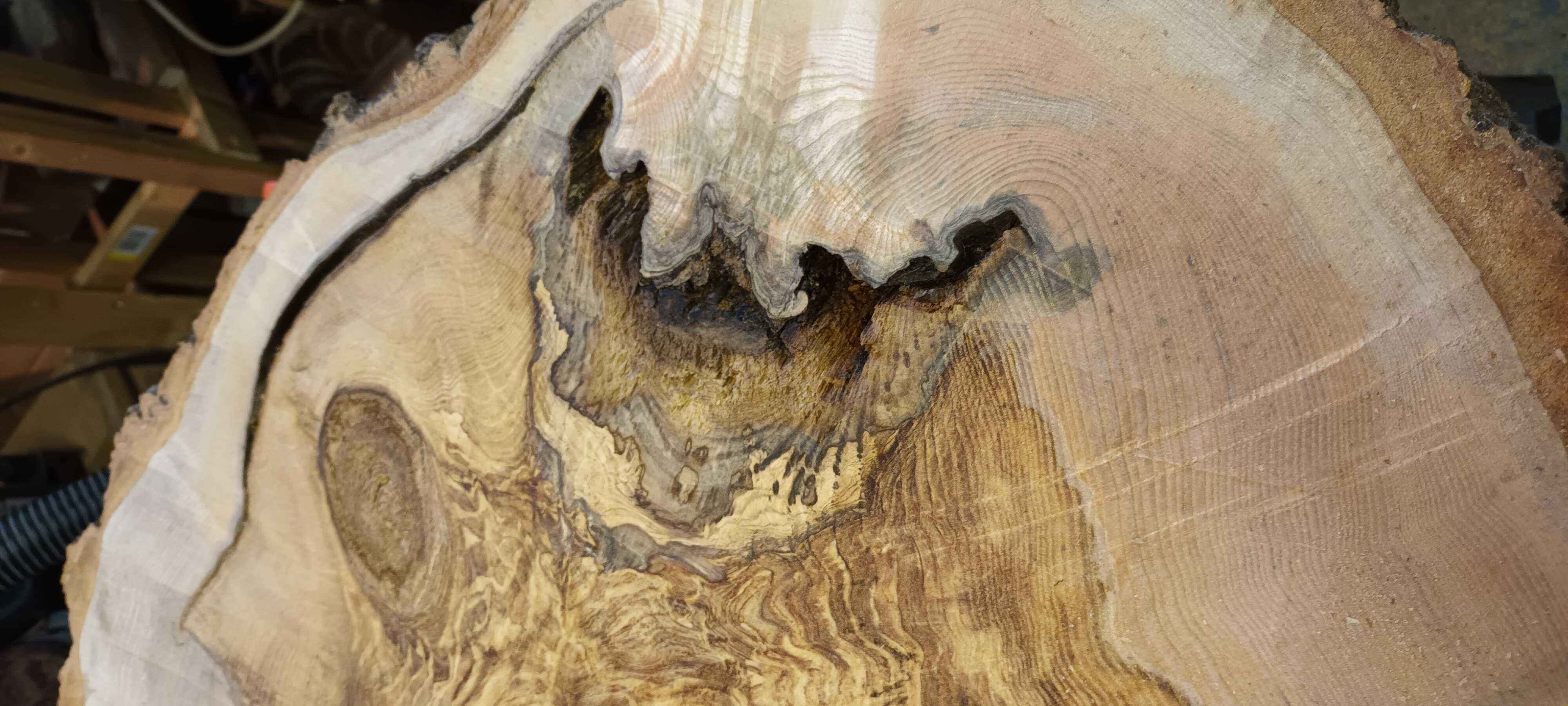
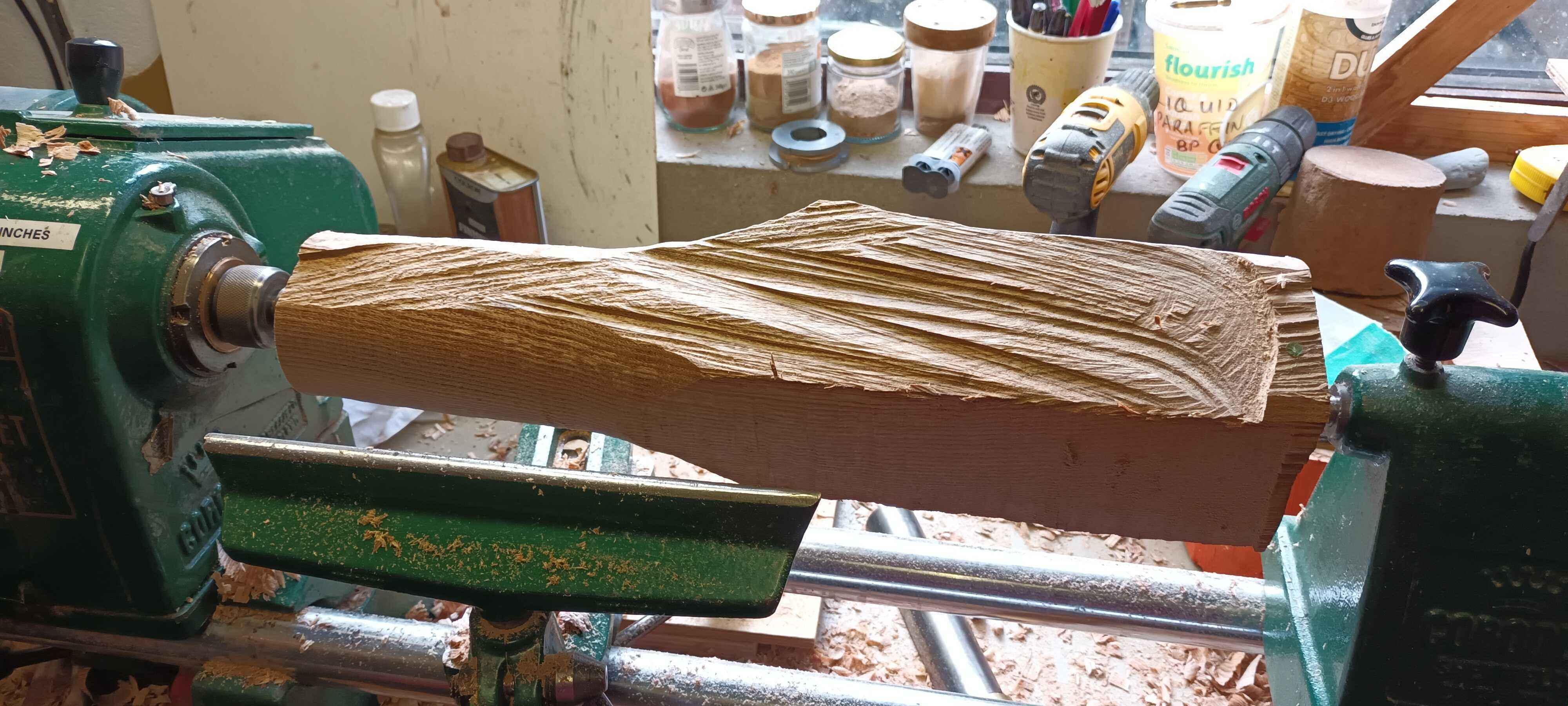
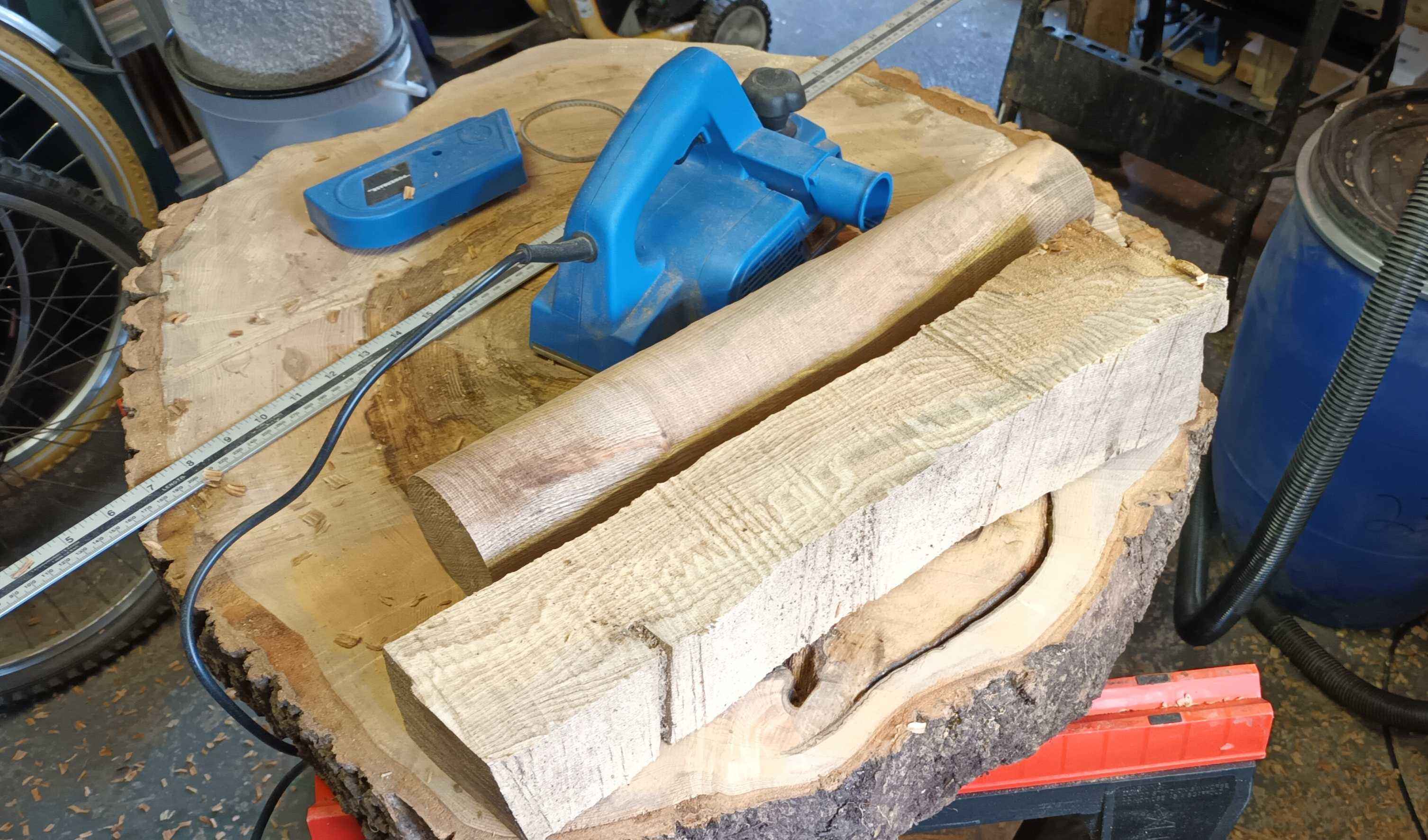
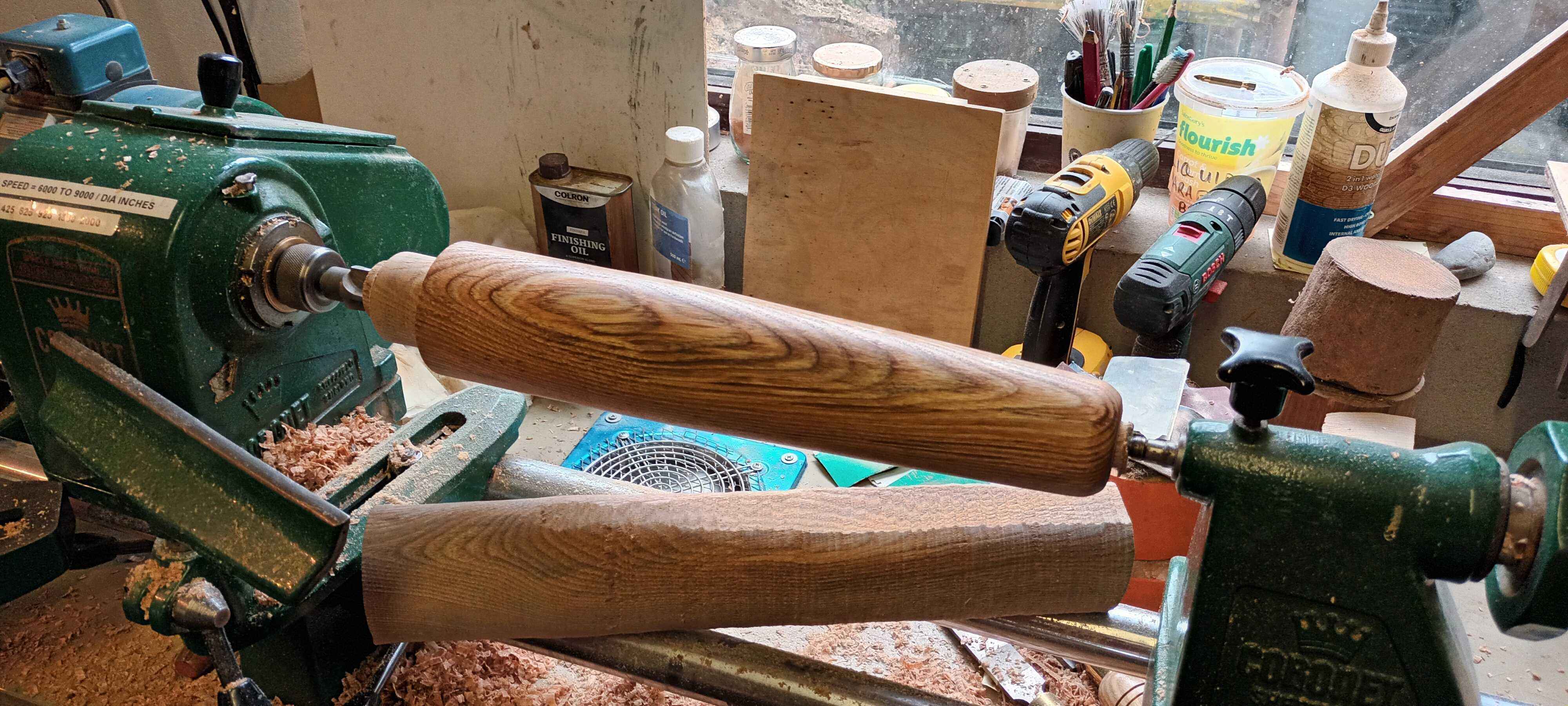
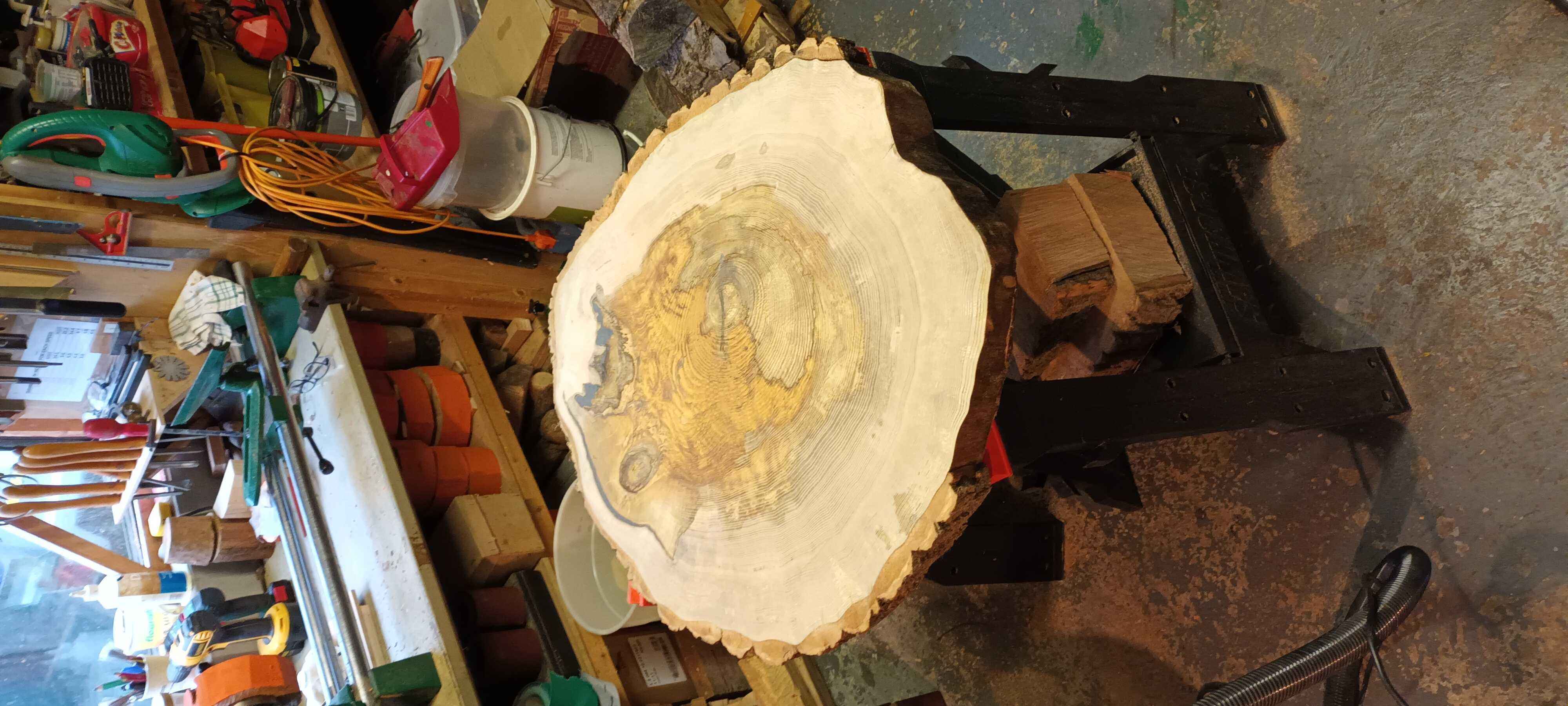
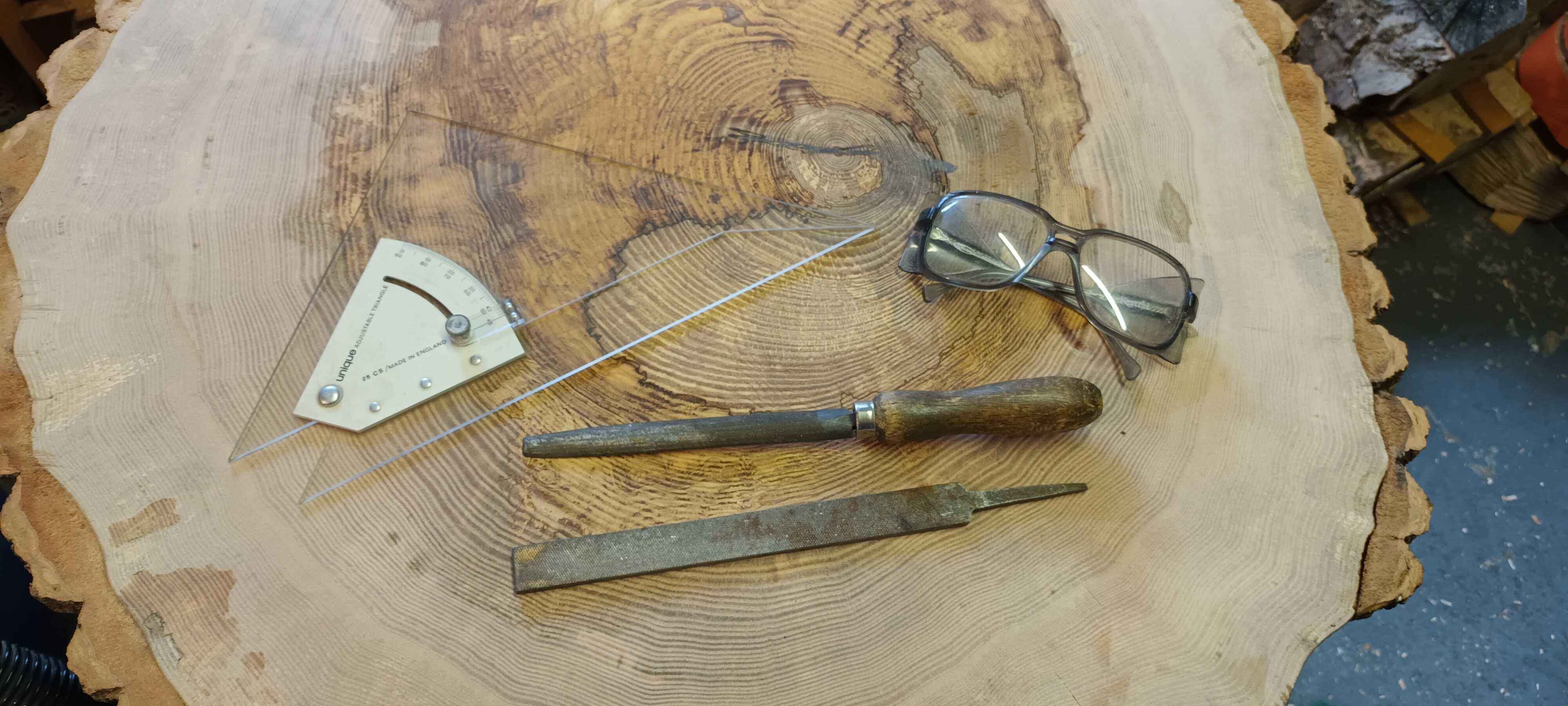
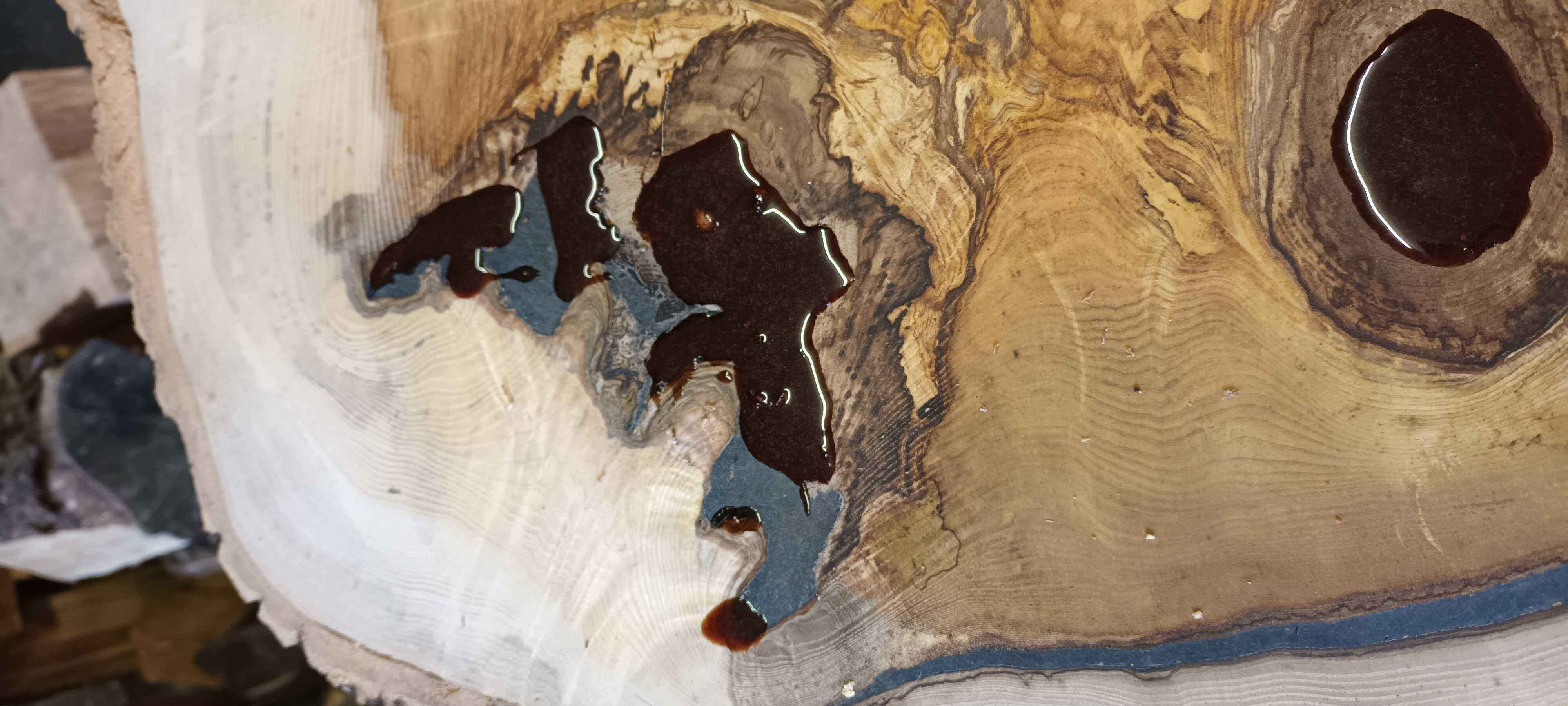
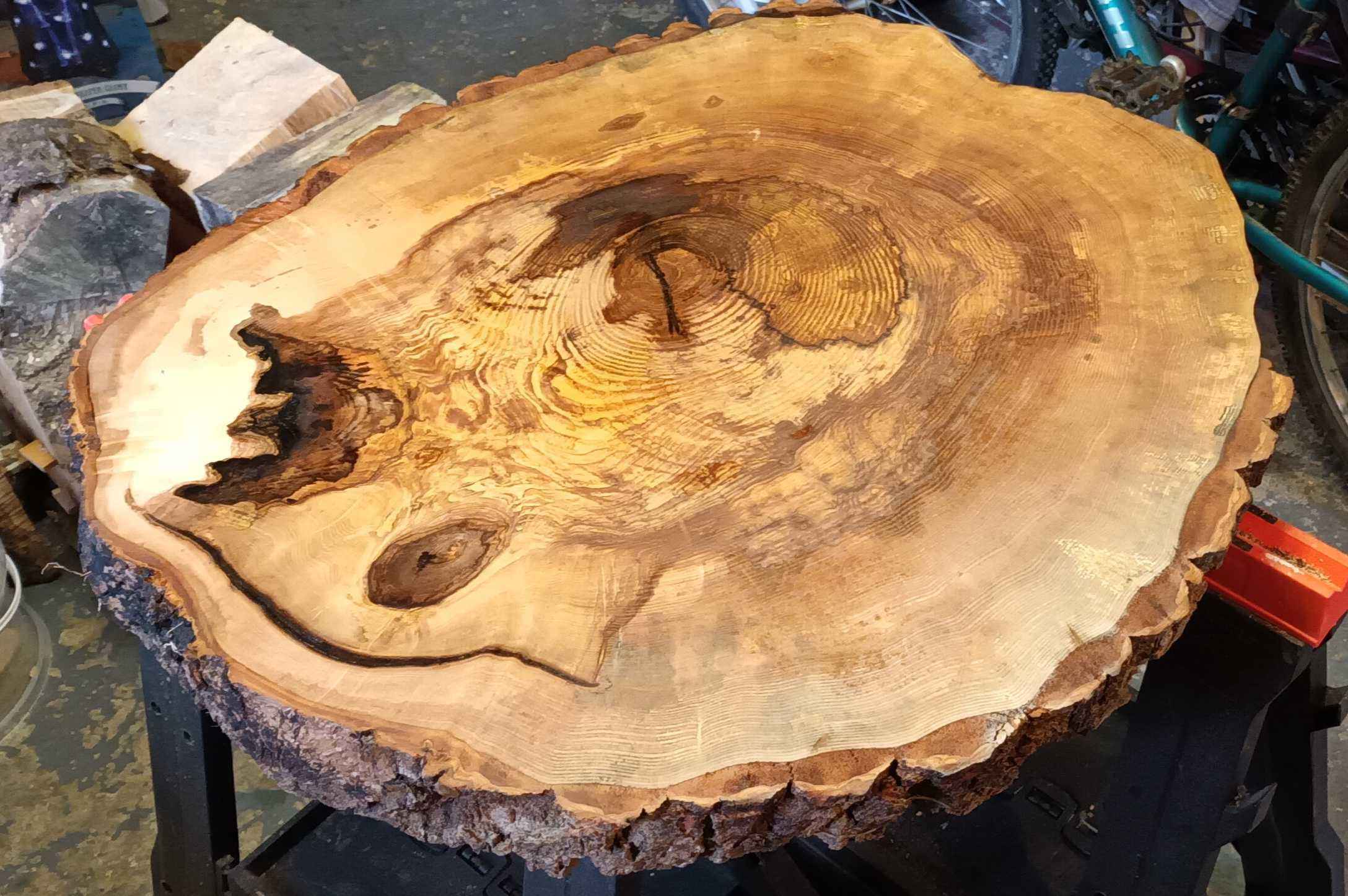
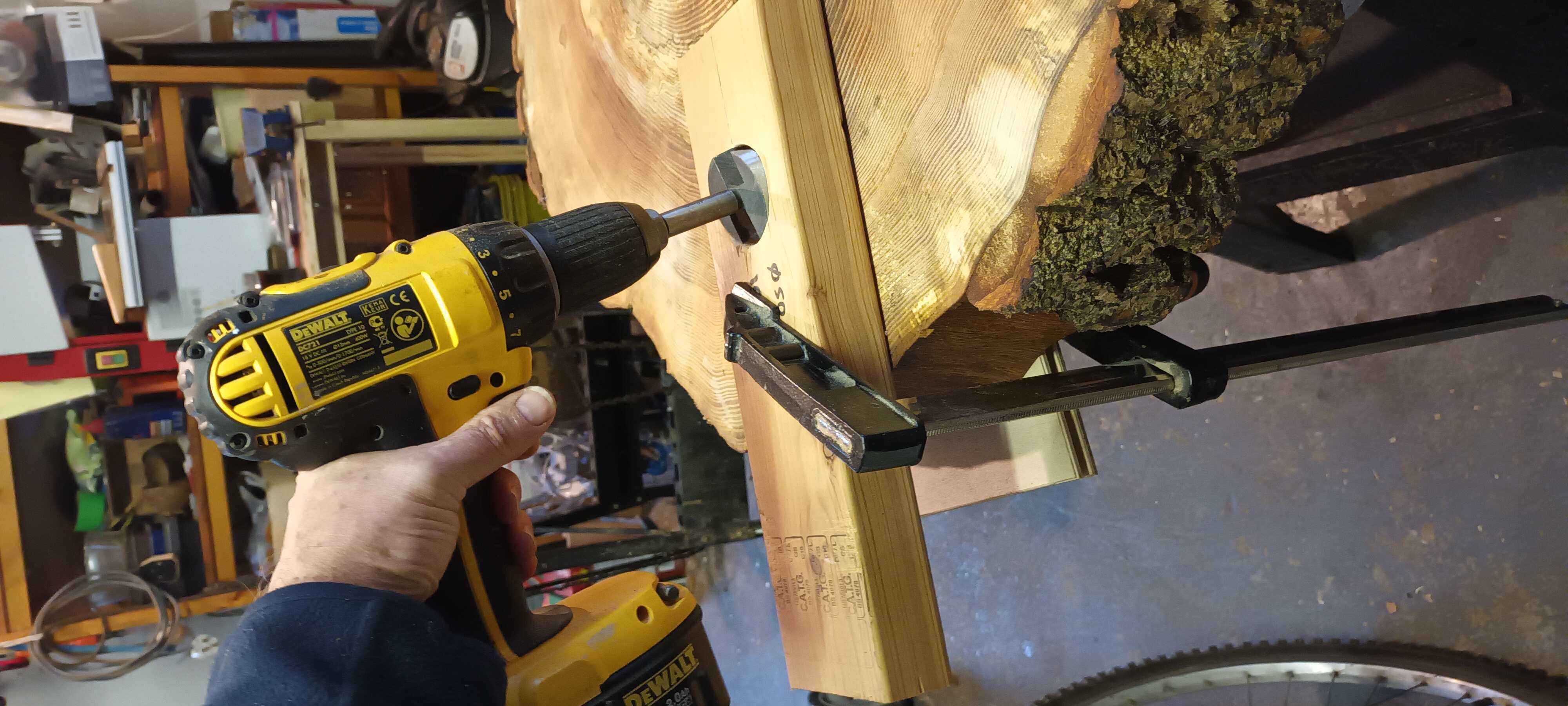
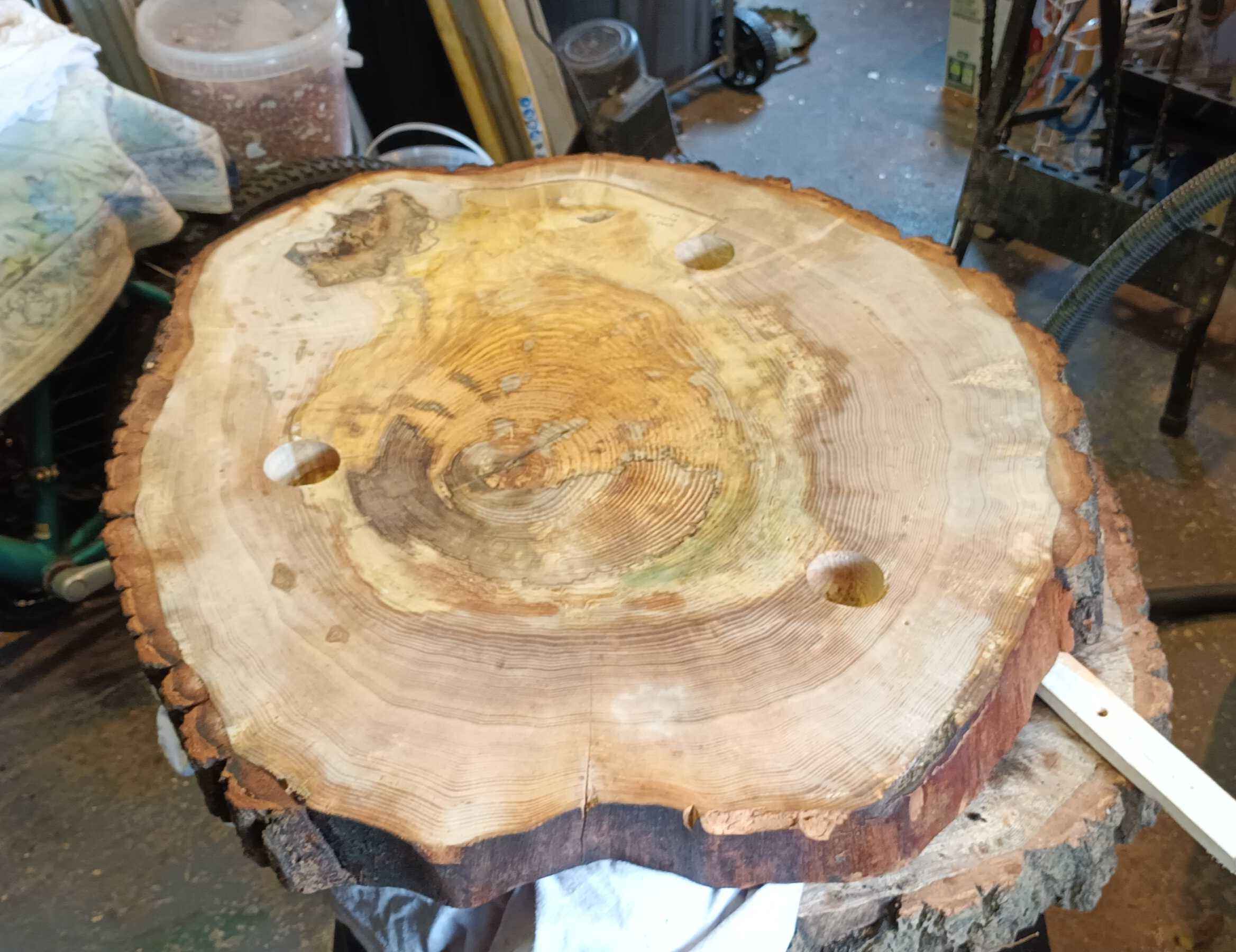
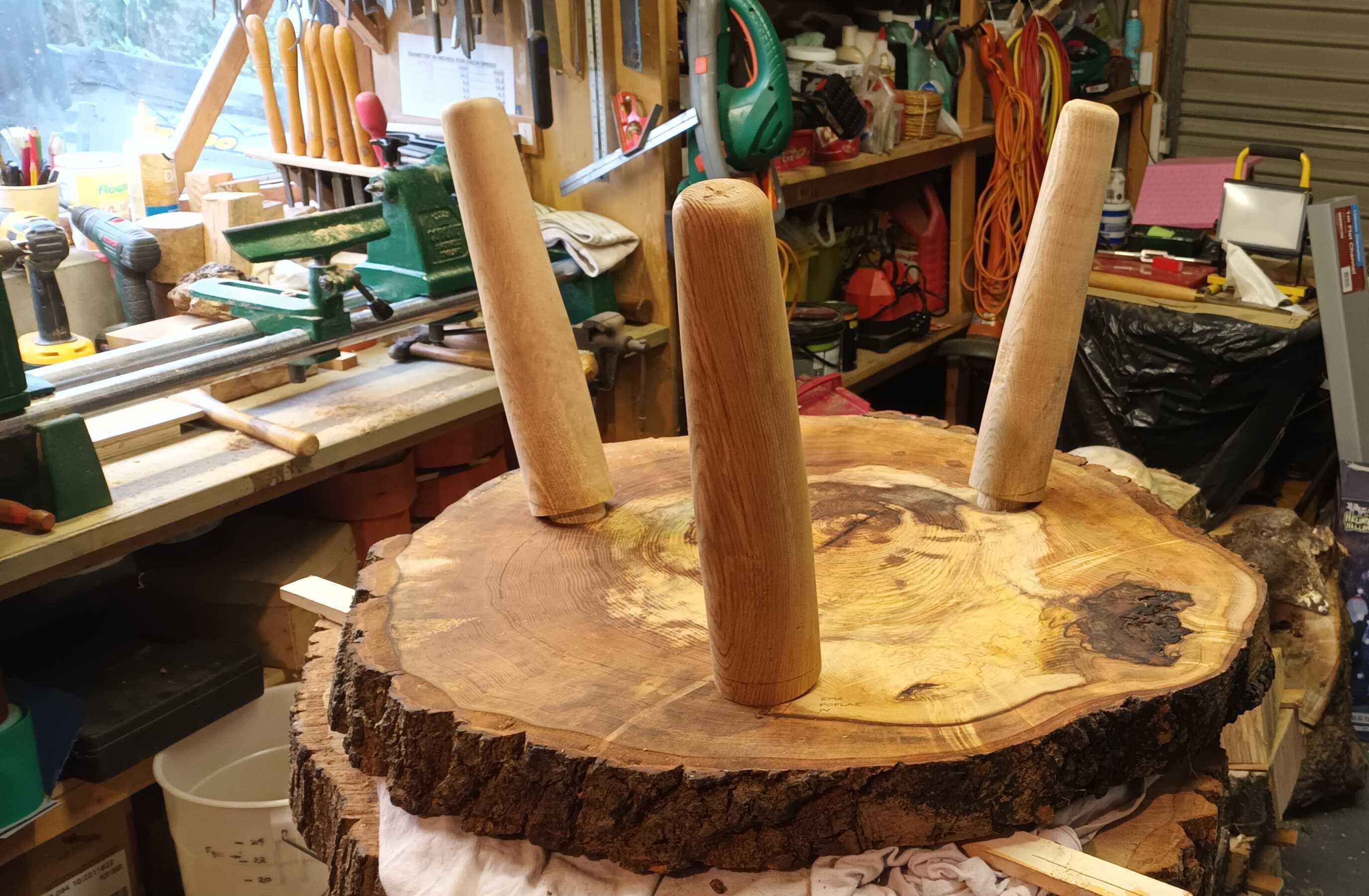
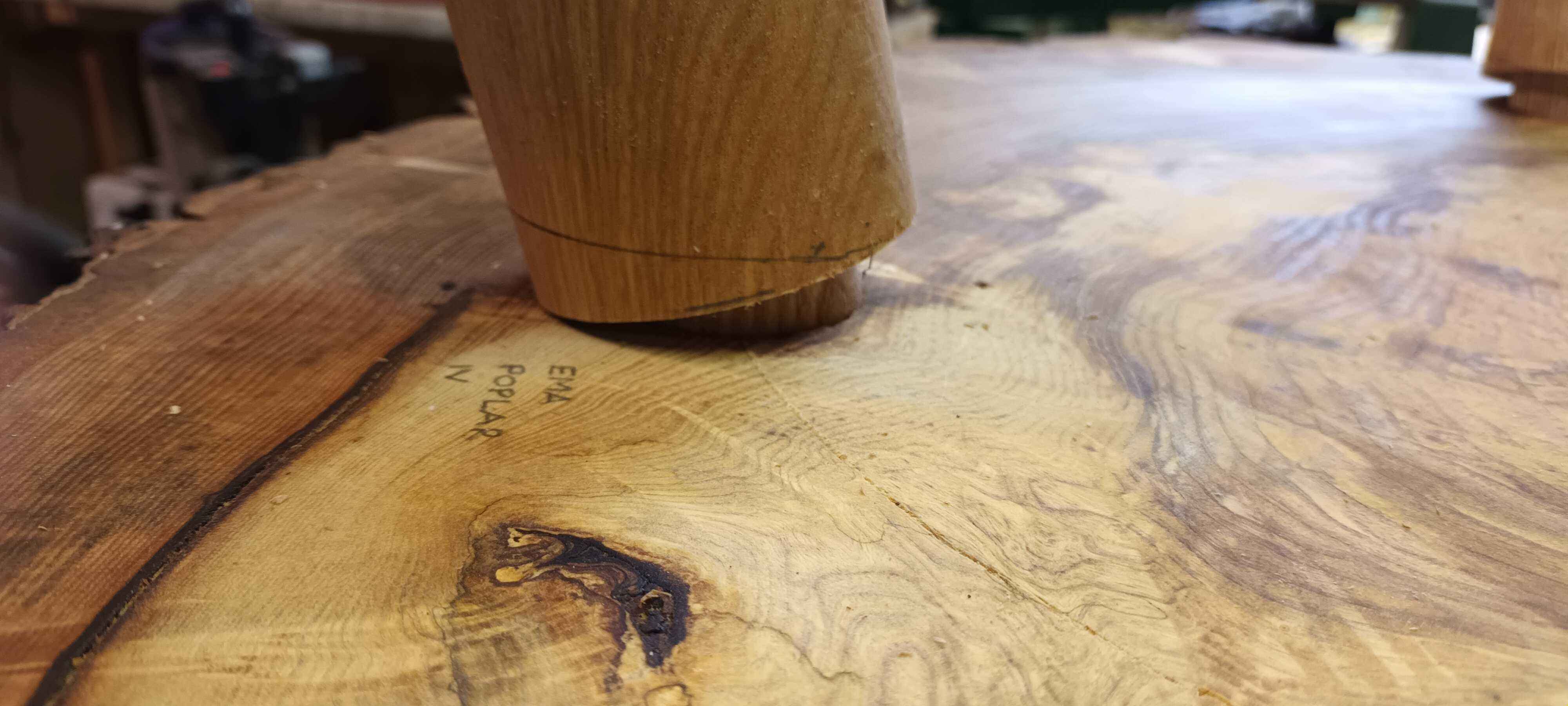
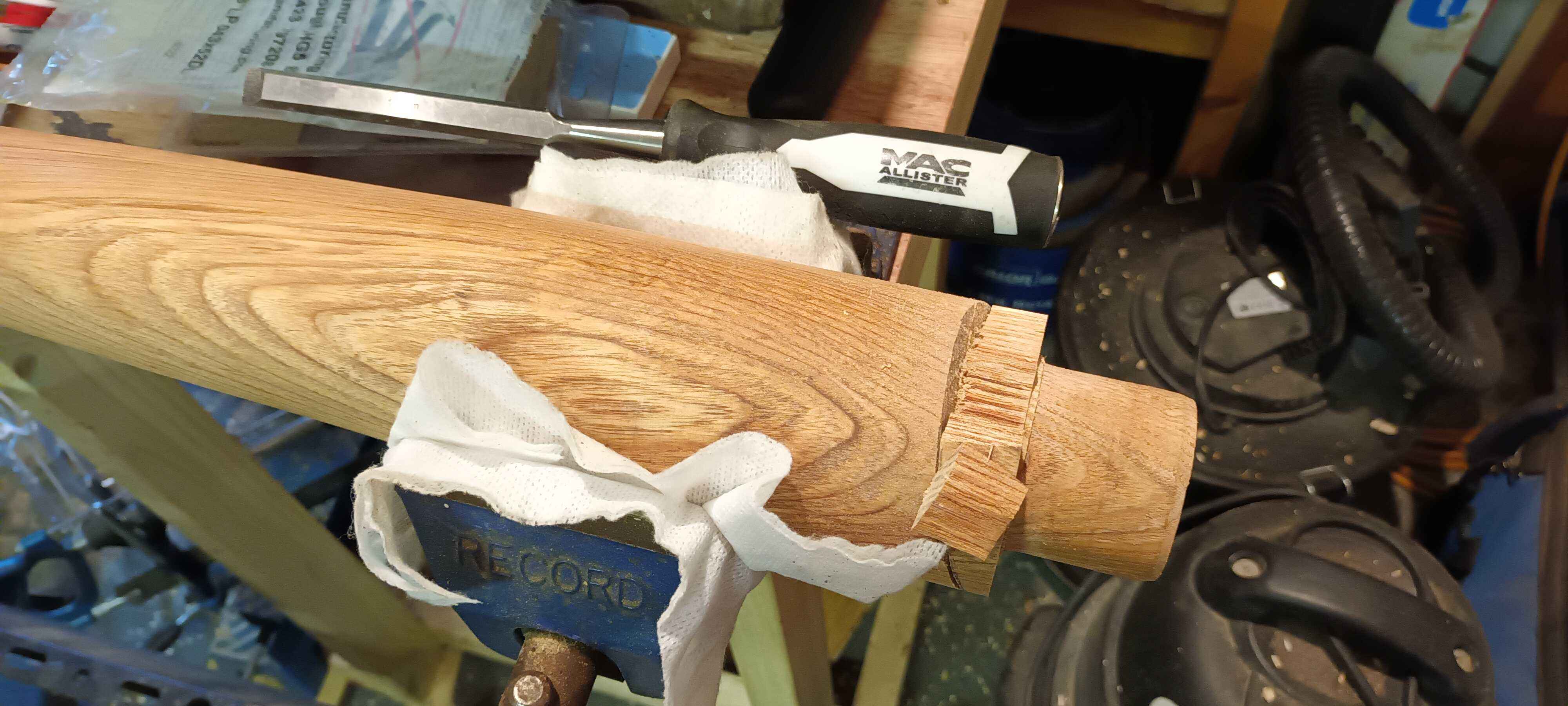
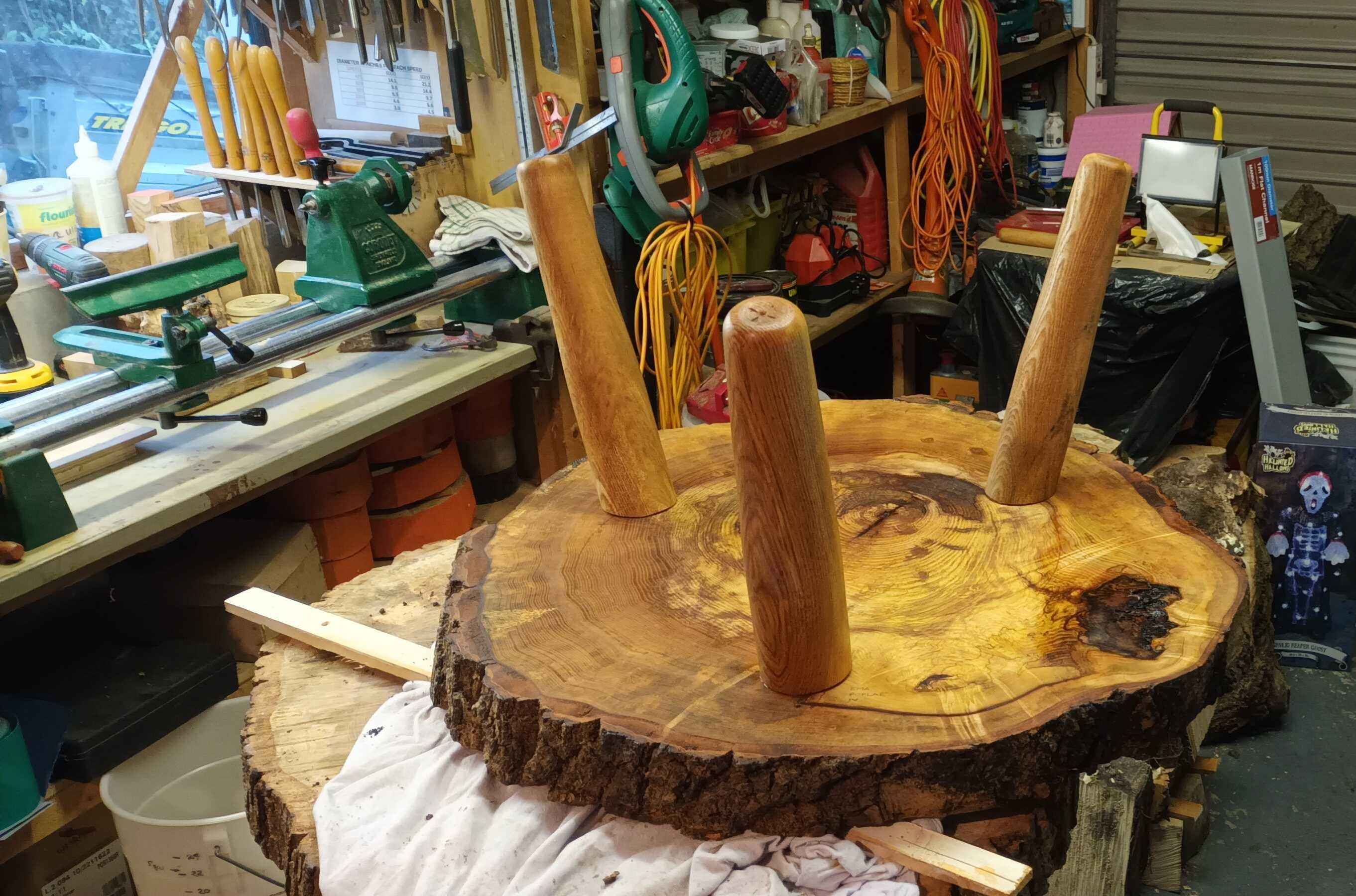
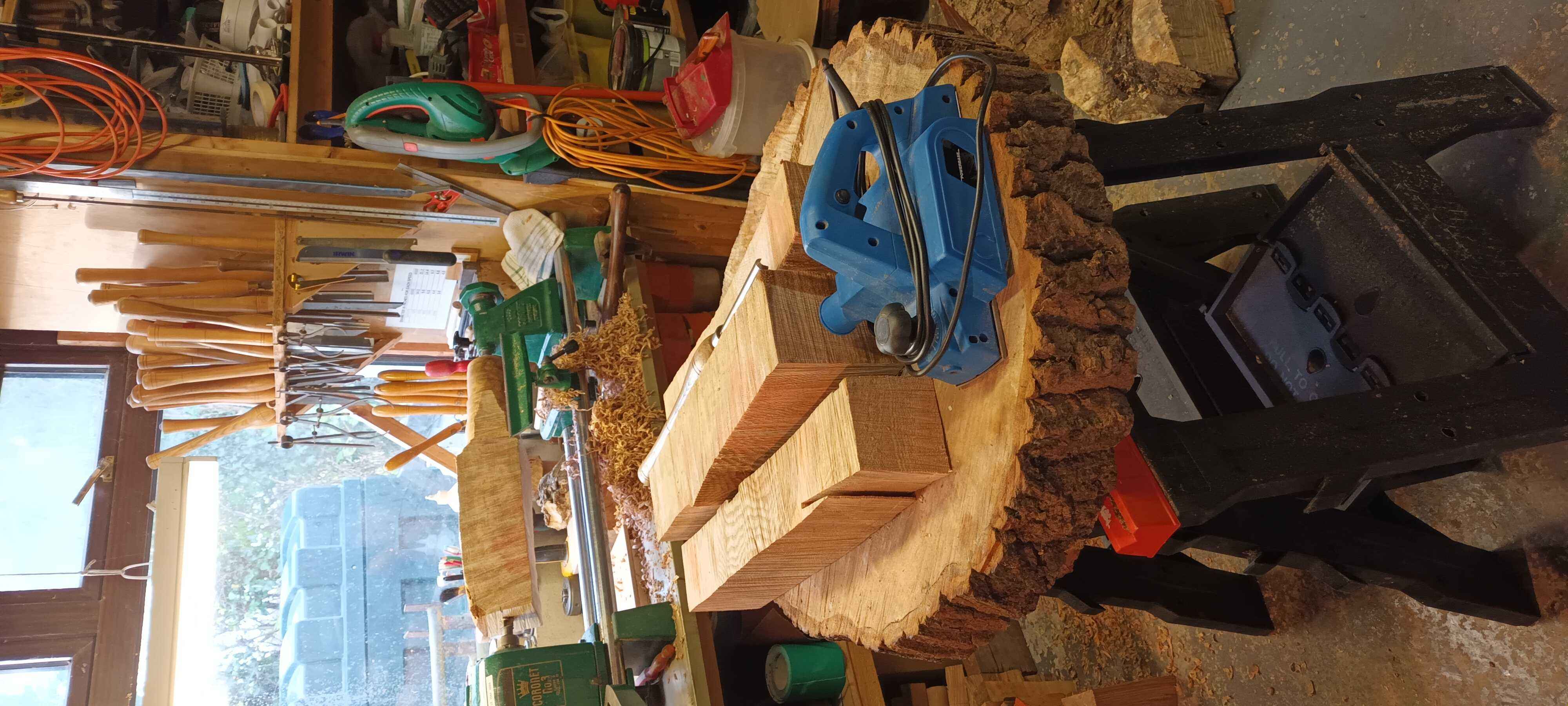
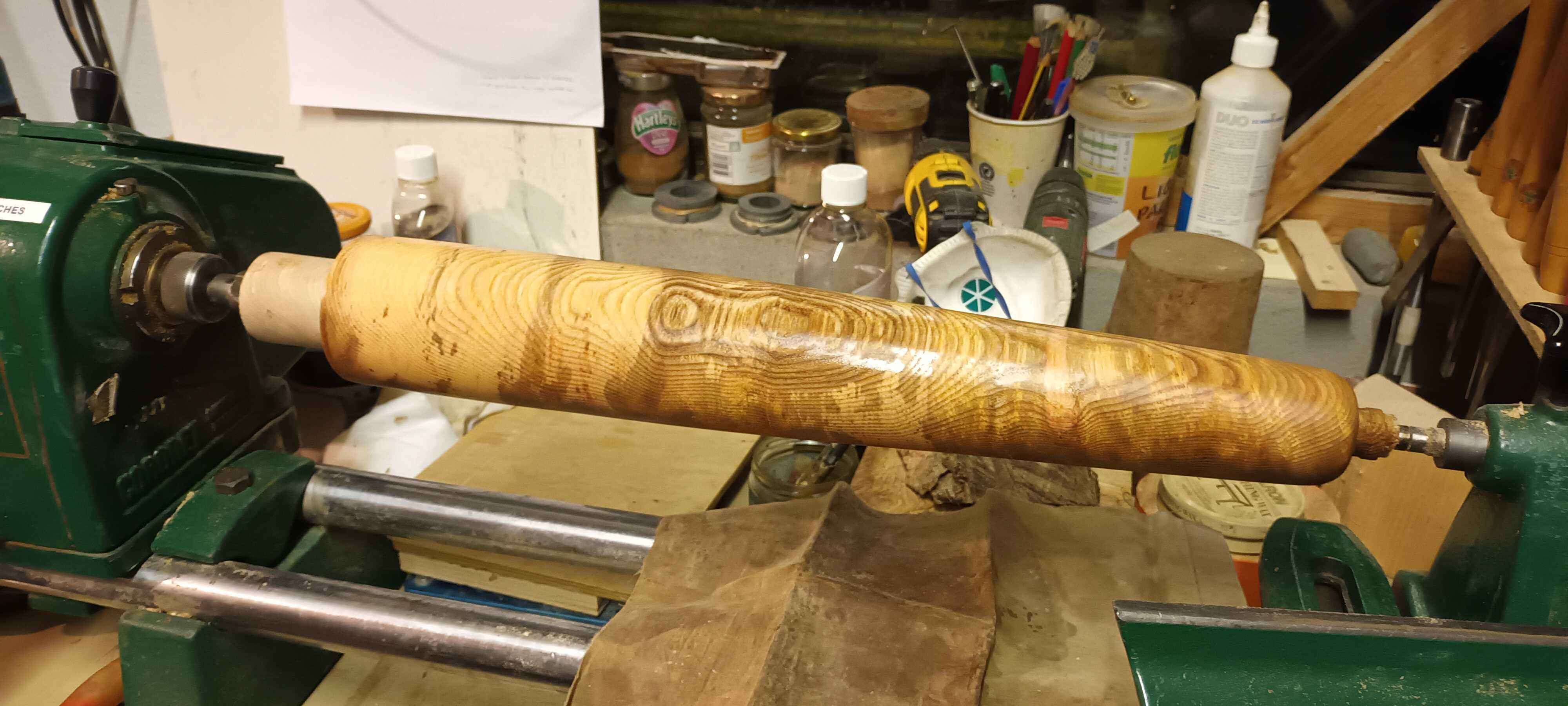
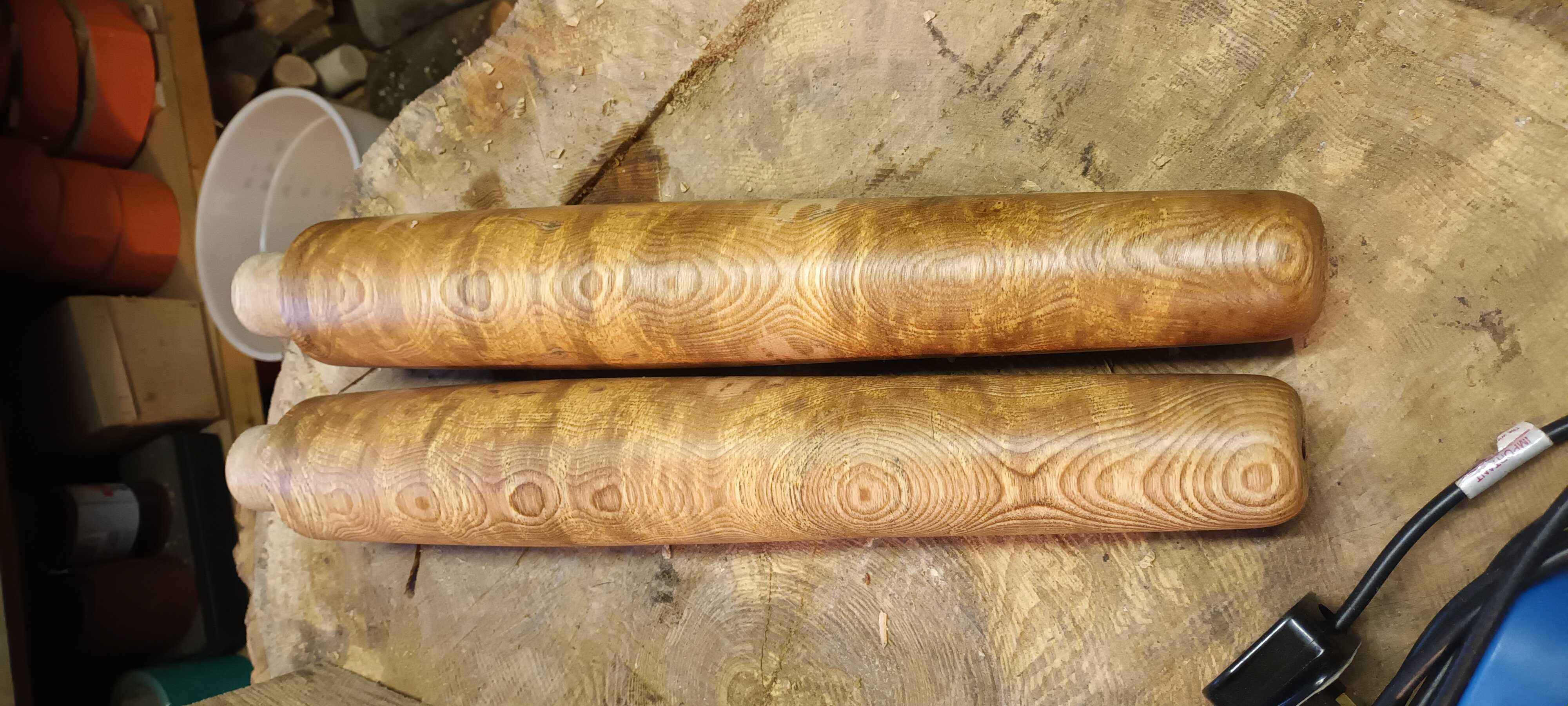
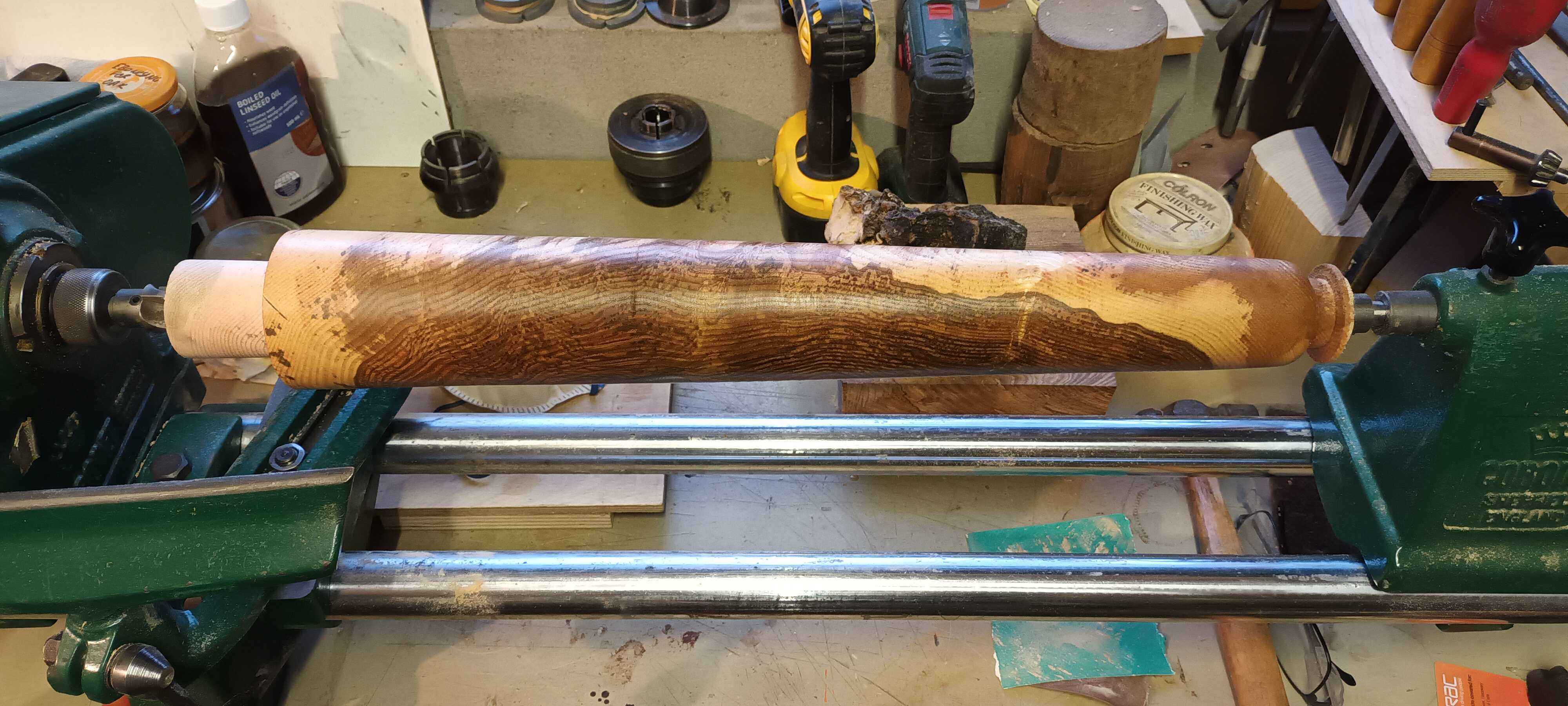
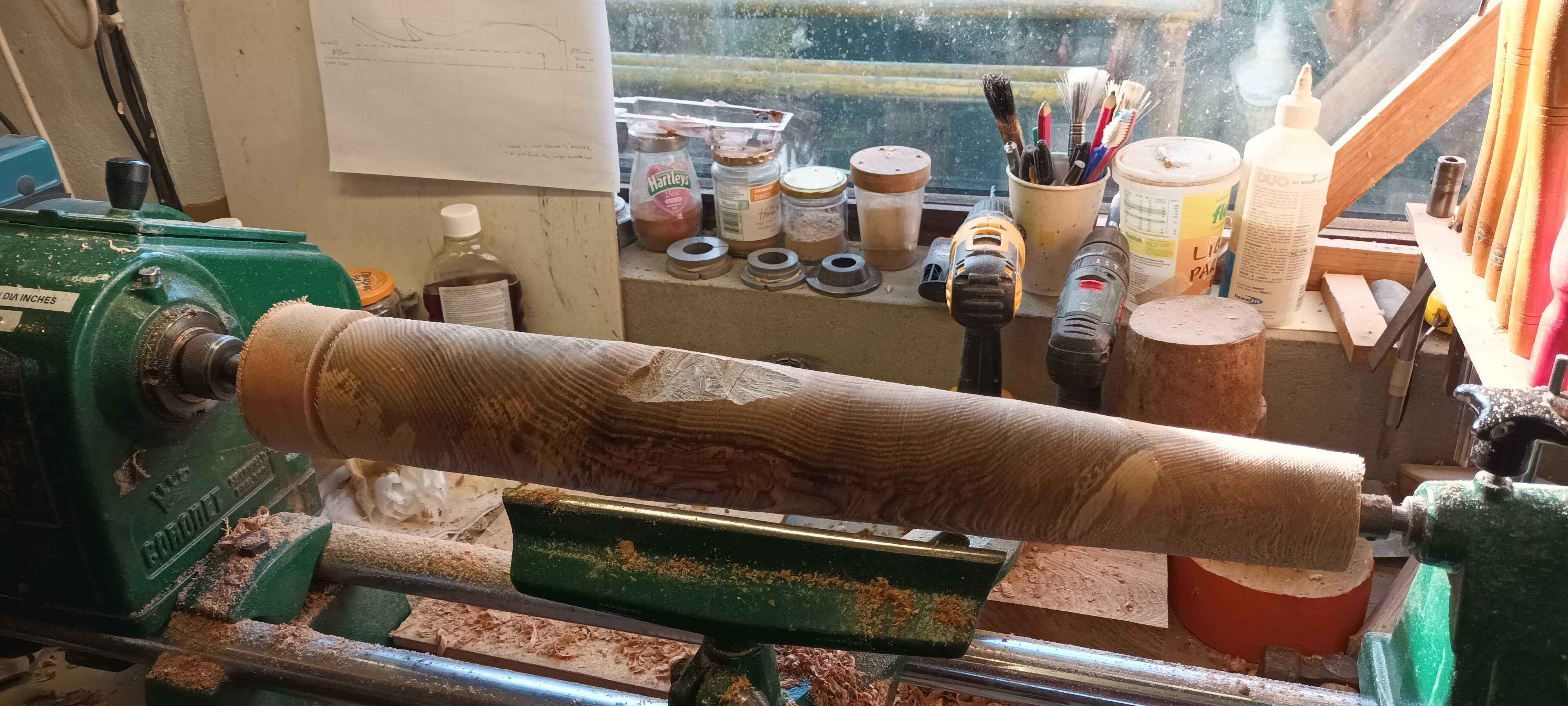
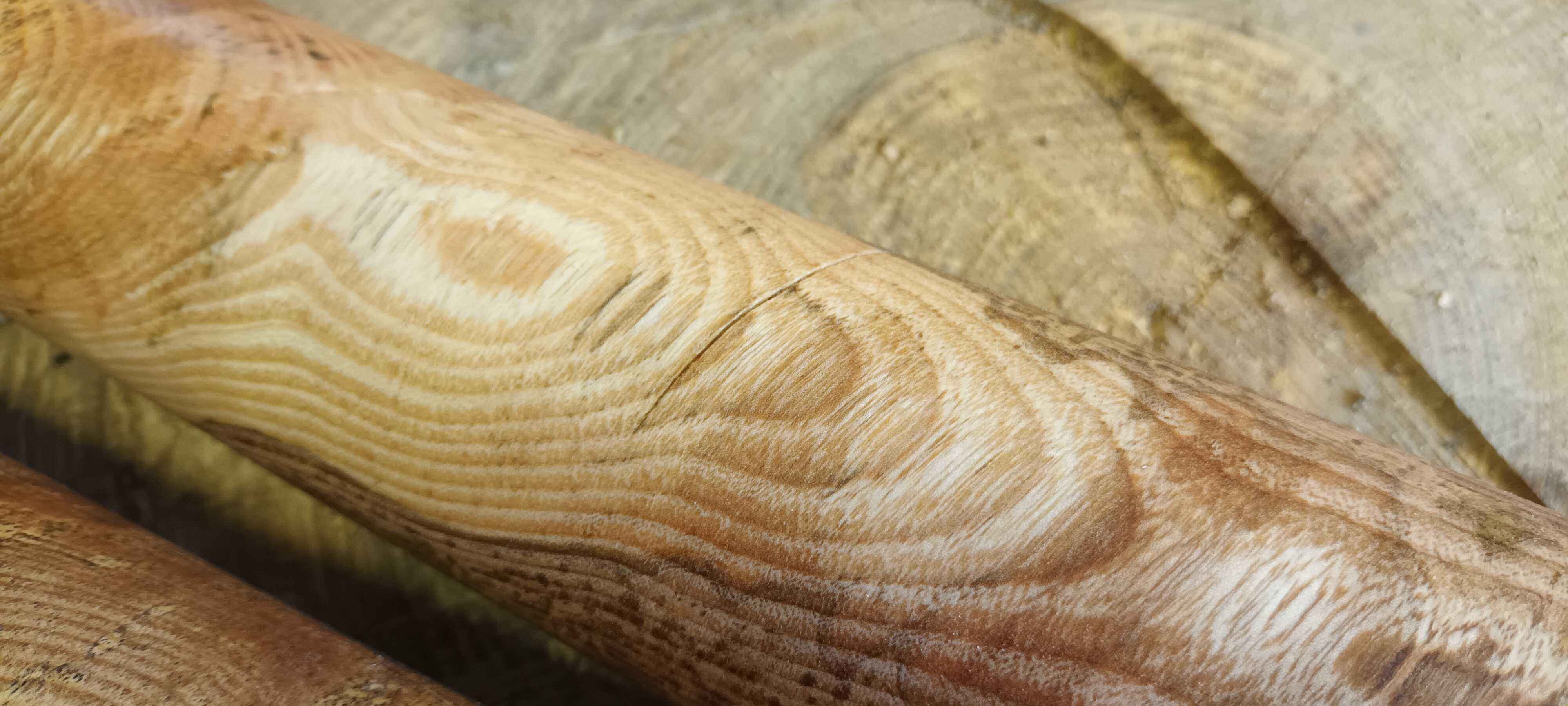
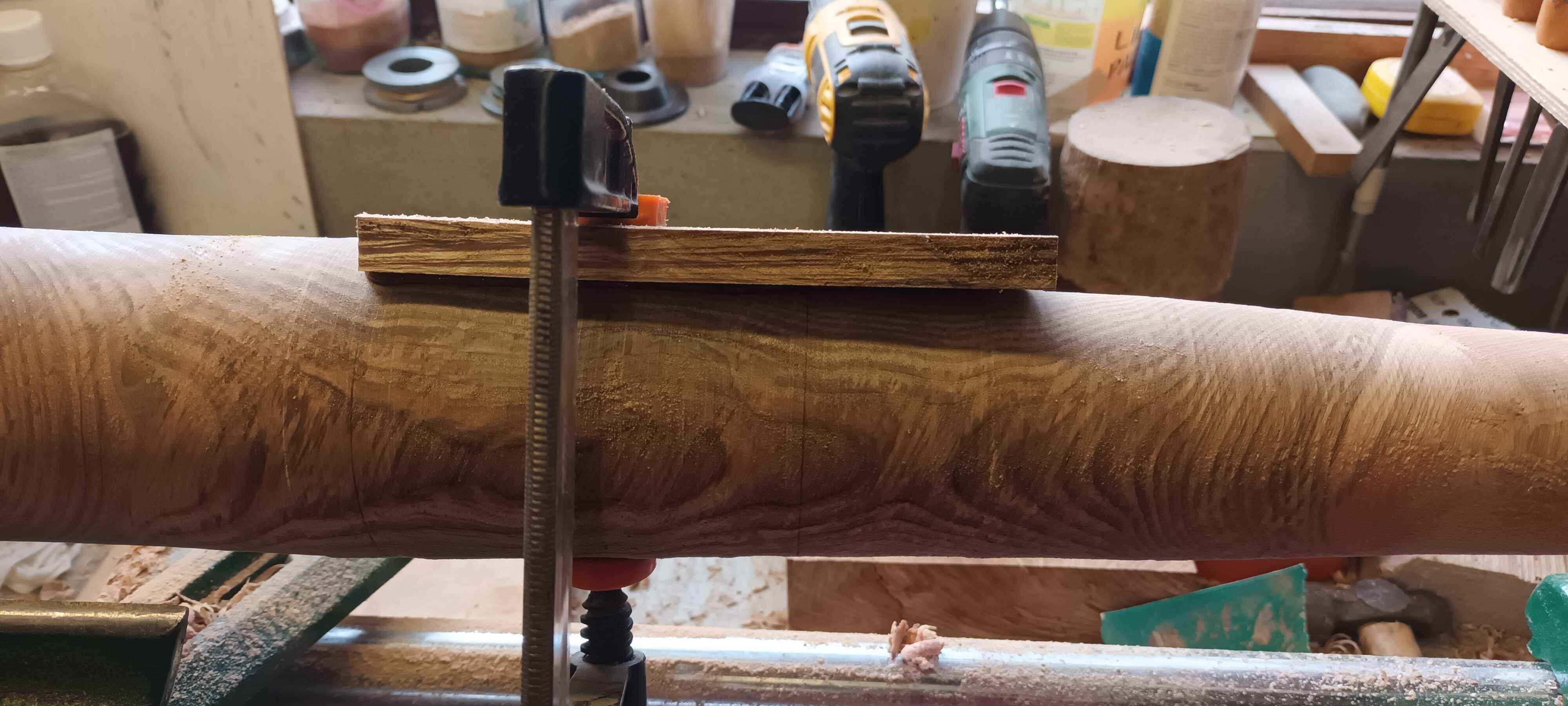
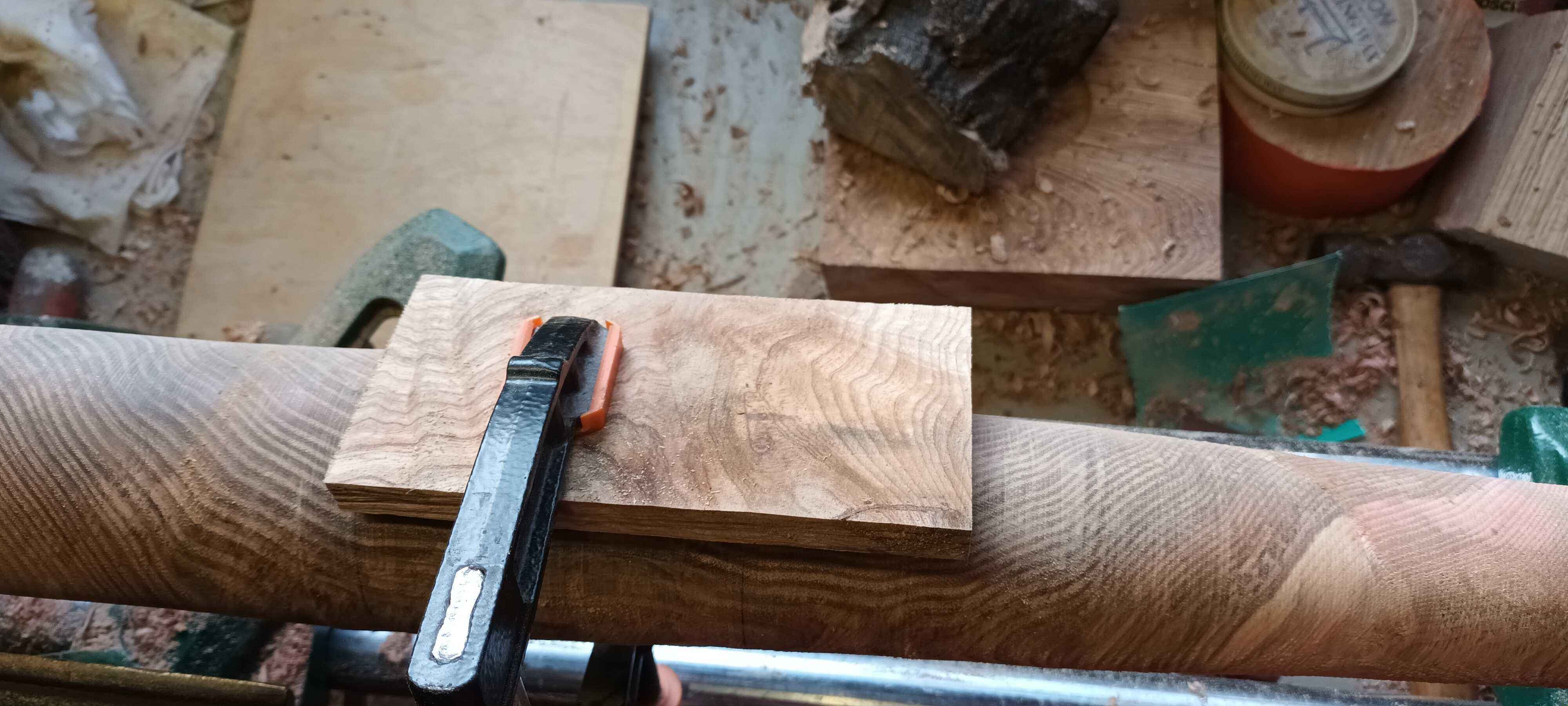
When I was cutting up the poplar tree I ended up with some slices that were intended just for splitting, but then I thought it would be a chance to try a slab table. I cut a few pieces which were suitable as legs and took it all home in the trailer. I lieue of a workbench I put the slab on a couple of trestles and just set to with my cheap B&Q electric planer to take out the saw marks and get the slab roughly 3" (75 mm) thick and fairly parallel. I nearly filled a 20 litre bin on my dust extractor with saw dust from planing end grain. There was a fairly large circumferential split along part of one side, and a bit of rot where the centre of a branch joined the main trunk (this rot was the main reason the tree was felled). I dug out the rot, and filled that divot and the crack with resin. When I sanded the table using my Bosch GEX150 (the Professional range are decently heavy duty, and I bought this when we were cleaning the bottom of our old boat) using #80 #120 and #240 and gave it a coat of teak oil. Being end grain it just sucked up a litre of teak oil while I looked on in shock. I switched to boiled linseed oil after that! I marked an 18" (450 mm) circle on the side I chose as the underside, and divided it in six with the compass so as to get the three legs evenly spaced. I decided on a 10 degree tilt, and made a wedge on the bandsaw, and a drill guide from a scrap 57 x 38 mm piece of timber on the drill press using the 48 mm Forstner bit. I tried clamping the guide to the table, but it wasn't steady enough so I screwed it down (it's the underside after all!). Drilling I found I needed to make a 28 mm pilot hole first, and sharpen the bits, which luckily my CBN wheel with a rounded edge and roughened flat side is just perfect for. Even so it was a bit of a wrist breaked using a de Walt electric screwdriver. If I was doing it again I would try and fix up a drill press to do the holes. The legs were turned on the lathe (so this is a turning project!) 3" (76 mm) diameter, tapering from about 7" down to a 2" (50 mm) diameter at the end. Each leg generated a bag of shavings for use as chicken litter by the chap who owns the tree! The legs are 18" (450 mm) long with a 1.5" spigot which is a little low, but it's what I had! Be very careful when fettling the spigot, it's very easy to take a little too much off, although by the time the weight of the slab is on it there's no noticeable wobble. The legs were set with a dab of PVA in the hole although this time I got a decent fit, but they may shrink as the whole project was semi-seasoned at best. One issue I hadn't anticipated was the large are of spalting which gives the table top it's lovely pattern was quite damp and woudln't take a polish. It took several weeks of "feeding" the top boiled linseed oil every few nights before I would get a shine. At that point I used some finishing oil, which would have just been wasted earlier. I have since found from Mike Holton's YouTube videos how to make a finish from beeswax and boiled linseed which will save the expense on finishing oil, and a test with teak oil and boiled linseed on a poplar offcut found no real difference, and the boiled linseed oil is much cheaper (no name brand from B&Q in 1.5 litre bottles). Counting the rings (more of an art than a science) I think this tree was planted around the time of Queen Victoria's coronation, and felled about the time of King Charles III, so I added small brass pins to mark the rings for the coronations of all the intervening monarchs, and one in the middle for Victoria. After I had that all done I suggested to the chap who owned the tree that he might like one, so I made another. This time I didn't have anything for the legs so I tried taking pieces "along the rings" on one of the huge slabs. This kind of worked, but it means the legs are cross-grain which makes the spigot rather weak. I have bought in some 4" square oak posts in case he needs new legs made (semi seasoned from a local yard L.E. Haslett in Clougher. They were very helpful about the legs not boxing the heartwood (which tends to lead to cracking). They are seasoning in the old coal shed now.
YouTube: slabtable video